

 Back to Resources
.svg) 27/05/25
27/05/25
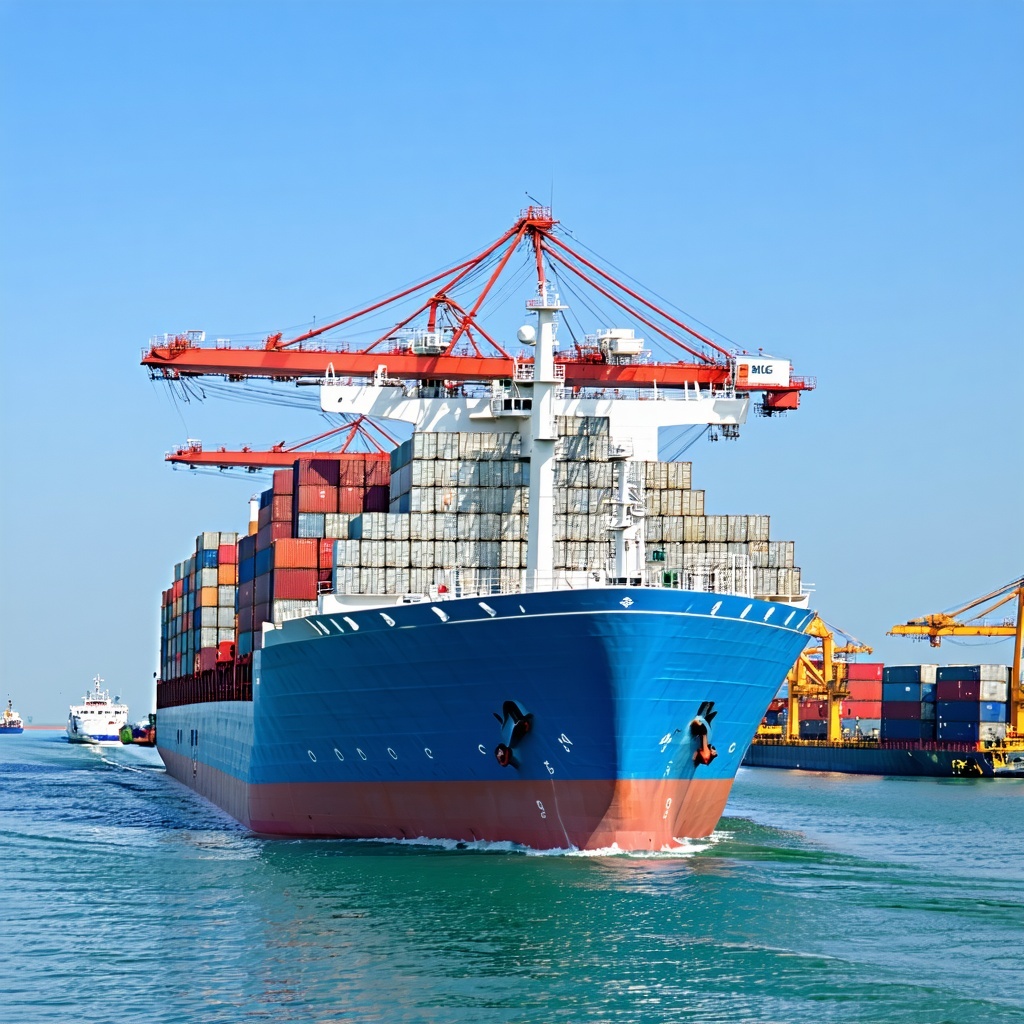
Intrastat is the EU system for collecting statistics on the movement of goods between member states, and it has run since January 1993, when customs declarations on intra-EU trade stopped. In Ireland the threshold is €750,000 a year in each direction, and returns fall due on the 23rd of the following month.
Who has to file an Intrastat return in Ireland?
The obligation falls on VAT-registered businesses whose intra-EU trade in goods passes a threshold. Each direction is measured separately, so a business can sit inside the system for arrivals and outside it for dispatches.
Services are outside Intrastat altogether, whatever their value. So are goods moving to or from countries outside the EU, where the registration that matters is an EORI number and the import VAT is handled through postponed accounting. Northern Ireland stays inside the system for goods under country code XI, while Great Britain left on 1 January 2021.
How Nathan Trust can help with Intrastat
We prepare and file Intrastat returns for businesses moving goods across EU borders, and we monitor thresholds for clients whose EU trade is growing, so a first return goes in on time rather than after a letter from Revenue.
If you are establishing in Ireland to reach the EU market, our guides to EU VAT registration in Ireland and registering a company in Ireland cover what comes first.

What are the Irish Intrastat thresholds?
Ireland works to two sets of figures: one decides whether you file at all, the other how much detail each declaration carries.
| Annual intra-EU trade | Arrivals | Dispatches |
| Monthly returns required above | €750,000 | €750,000 |
| Additional fields required above | €5,000,000 | €34,000,000 |
The first pair rose to €750,000 on 1 January 2025, up from €500,000 on arrivals and €635,000 on dispatches. Above the second pair, two further fields become mandatory: delivery terms, and statistical value adjusted to a CIF basis on arrivals and a FOB basis on dispatches.
Crossing a threshold commits you to monthly returns from that month onward, and because you can only stop at the end of a calendar year in which your trade stayed below it, a business that crosses in March files every month for the rest of that year and right through the next one, ending with a December return submitted the following January.
Intrastat thresholds across the EU
Each member state sets its own thresholds and reviews them annually, so a business selling into several markets can be inside the system in one country and outside it in another. The figures below apply for 2026.
|
Country |
Arrivals |
Dispatches |
|
Austria |
€5,000,000 |
€1,200,000 |
|
Belgium |
€1,500,000 |
€1,000,000 |
|
Bulgaria |
€899,874 |
€1,150,407 |
|
Croatia |
€450,000 |
€300,000 |
|
Cyprus |
€380,000 |
€75,000 |
|
Czechia |
CZK 15,000,000 |
CZK 15,000,000 |
|
Denmark |
DKK 42,000,000 |
DKK 11,800,000 |
|
Estonia |
Not required |
€325,000 |
|
Finland |
Not required |
€800,000 |
|
France |
Notified by authority |
Notified by authority |
|
Germany |
€3,000,000 |
€1,000,000 |
|
Greece |
€250,000 |
€90,000 |
|
Hungary |
HUF 500,000,000 |
HUF 200,000,000 |
|
Ireland |
€750,000 |
€750,000 |
|
Italy |
€2,000,000 |
All dispatches |
|
Latvia |
€380,000 |
€220,000 |
|
Lithuania |
€600,000 |
€400,000 |
|
Luxembourg |
€250,000 |
€200,000 |
|
Malta |
€700 |
€700 |
|
Netherlands |
Notified by authority |
Notified by authority |
|
Northern Ireland |
£500,000 |
£250,000 |
|
Poland |
PLN 6,000,000 |
PLN 2,800,000 |
|
Portugal |
€650,000 |
€600,000 |
|
Romania |
RON 1,000,000 |
RON 1,000,000 |
|
Slovakia |
€1,000,000 |
€1,000,000 |
|
Slovenia |
€300,000 |
€280,000 |
|
Spain |
€400,000 |
€400,000 |
|
Sweden |
SEK 15,000,000 |
SEK 12,000,000 |
France and the Netherlands publish no threshold. Their statistics authorities monitor VAT returns and write to the businesses that have to file.
How do you file an Intrastat return in Ireland?
Returns go to Revenue through ROS by the 23rd of the month following the period they cover. Revenue has moved the Intrastat return into the Return Preparation Facility, so there is no longer an offline application to download and install. Figures can be typed in directly or imported from a .csv file. The facility doesn't run in Safari, so Chrome or Firefox is needed on a Mac.
A trader can appoint an agent to file, but legal responsibility stays with the trader. Where a VAT group files a consolidated VAT 3, the group remitter can submit one declaration for the whole group, provided Revenue's Intrastat team is told in advance which companies it covers. Nathan Trust files under both arrangements, and returns must be kept for two years.

What has to go on each declaration?
Every line carries an eight-digit commodity code from the Combined Nomenclature, the member state of consignment or destination, the country of origin, the invoice value in euro excluding VAT and excise, net mass in kilograms, the mode of transport and, on dispatches, the customer's VAT number. Country of origin is mandatory on dispatches as well as arrivals, which catches out businesses that only ever collected it on the way in.
Where there is no partner VAT number, as on a sale to a private individual, that has to be confirmed in ROS before the return will submit. Invoice lines of €1,000 or less can be grouped under commodity code 99500000 where the country of consignment or destination is the same, and those lines need only three fields. Classification is where most of the work in a first return sits, and Nathan Trust handles it with clients.
What is the difference between Intrastat and VIES?
Both report intra-EU trade, but they are separate obligations with different triggers.
|
|
Intrastat |
VIES |
|
Purpose |
Trade statistics |
VAT compliance |
|
Covers |
Goods only |
Goods and services |
|
Threshold |
€750,000 per flow |
None |
|
Frequency |
Monthly |
Monthly or quarterly |
The threshold is where the two are most often confused. VIES has none, so a statement is due on every intra-EU supply whatever its value, while Intrastat starts at €750,000. A business below the Intrastat threshold still files VIES. Filing it is also a condition of zero-rating the supply, as our guide to VIES in Ireland explains.
Intrastat sits alongside boxes E1 and E2 on the VAT 3 return, which cannot be left blank even in a month with no intra-EU trade. The two do not cover identical ground. Returned goods, free replacements and goods sent for repair belong on the Intrastat declaration but not in E1 or E2.
Nil returns, corrections and penalties
A month with no qualifying trade still needs a return, and a nil declaration is due every month until the obligation ends. A correction is required where a declared value is out by 5% or more, and Revenue's Intrastat team has to be told immediately rather than at the next return.
Penalties under Intrastat do not apply automatically. It is enforced under the Statistics Act 1993, where the offence under section 36 is failing to provide information after a formal direction has been served, and section 44 sets the fines at up to IR£1,000 on summary conviction, roughly €1,265, or up to IR£20,000 on indictment. The daily fine of about €60 applies under section 44(2) only where the contravention continues after conviction, rather than from the day a return is late.

Frequently asked questions
Do I still file an Intrastat return if I had no EU trade this month?
Yes. A nil return is due every month for as long as you remain inside the system.
Do I need an Intrastat return for goods from outside the EU?
No, those goods are cleared by customs declaration. Intrastat picks them up only if they later travel between member states.
Does Intrastat apply to distance sales to consumers?
Yes, once the dispatches threshold is passed, even where Irish VAT is charged. Such sales may also create a registration obligation in the customer's country, which the VAT One Stop Shop absorbs.
.svg)
.svg)
.svg)
.svg)

.svg)



.png?width=661&height=359&name=Video%20img-01%20copy%201%20(1).png)
.svg)